
Checking Criminal History in Spokane County
Begin with the question, not a broad name search. A filed felony belongs with the Spokane County Clerk and Superior Court. A misdemeanor may sit in District Court or the municipal court shown on the citation. Current local custody appears through Detention Services. Police narratives stay with the agency that investigated the event. WATCH, run by the Washington State Patrol, is a statewide repository product rather than a copy of any one Spokane County file.
Gather the full legal name, date of birth when the official channel accepts it, other names used, an incident or case number, and a date range. Those details help separate people with similar names. Then keep the identifiers from each result. A police report number routes an agency request, a booking number identifies a detention entry, and a court case number leads to the filed disposition.
- Open the Spokane County Search Portal and choose the court or custody source that fits the question.
- Search local and statewide court indexes by legal name or case number, then note the court that owns the file.
- Check the official roster for current or recent county custody without treating a booking charge as a conviction.
- Request the incident narrative from the arresting agency and court documents from the correct clerk.
- Use WATCH for a Washington repository transcript, or fingerprints when positive identity is required for self-review.
Four Spokane County Criminal Record Systems
One event can create four records. The arresting agency writes the incident or arrest report. Spokane County Detention Services creates a booking entry after intake. A prosecutor decides whether to file a charge, and the chosen court then builds its own docket. Fingerprints and reportable events may also reach the Washington State Identification System. Each file has a different custodian, purpose, and access rule.
The flow is: agency report → jail booking → prosecutor review → court case and disposition → WSP repository update. The line is not always smooth. A probable-cause charge may be declined, amended, or replaced. A court outcome may arrive late or fail to match an arrest cycle. For that reason, readers should compare the report number, booking number, case number, and state record before concluding that two entries describe the same result.
Note: A charge shown at Spokane County booking is an allegation, while the court docket supplies the filed charge and final disposition.
Washington Official Background Checks
The Washington Access to Criminal History, known as WATCH, offers the public name-and-date-of-birth search. It returns Washington conviction information, recent arrests whose dispositions remain pending, and certain registration information. It does not expose every nonconviction arrest in the state repository, federal cases, other states, or local police narratives. Each name search costs $11 even when the response finds no exact match.
For review of your own identity-linked Washington record, WSP accepts fingerprint-based requests. The listed record-review charge is $58 plus fingerprint capture. WSP's Olympia service lists a $16 capture fee, while local agencies set their own rates. The FBI Identity History Summary is another subject-access product for FBI-held multistate and federal submissions. It requires fingerprints and is not a public name search.
The official WATCH overview shows the product's scope and fee information.
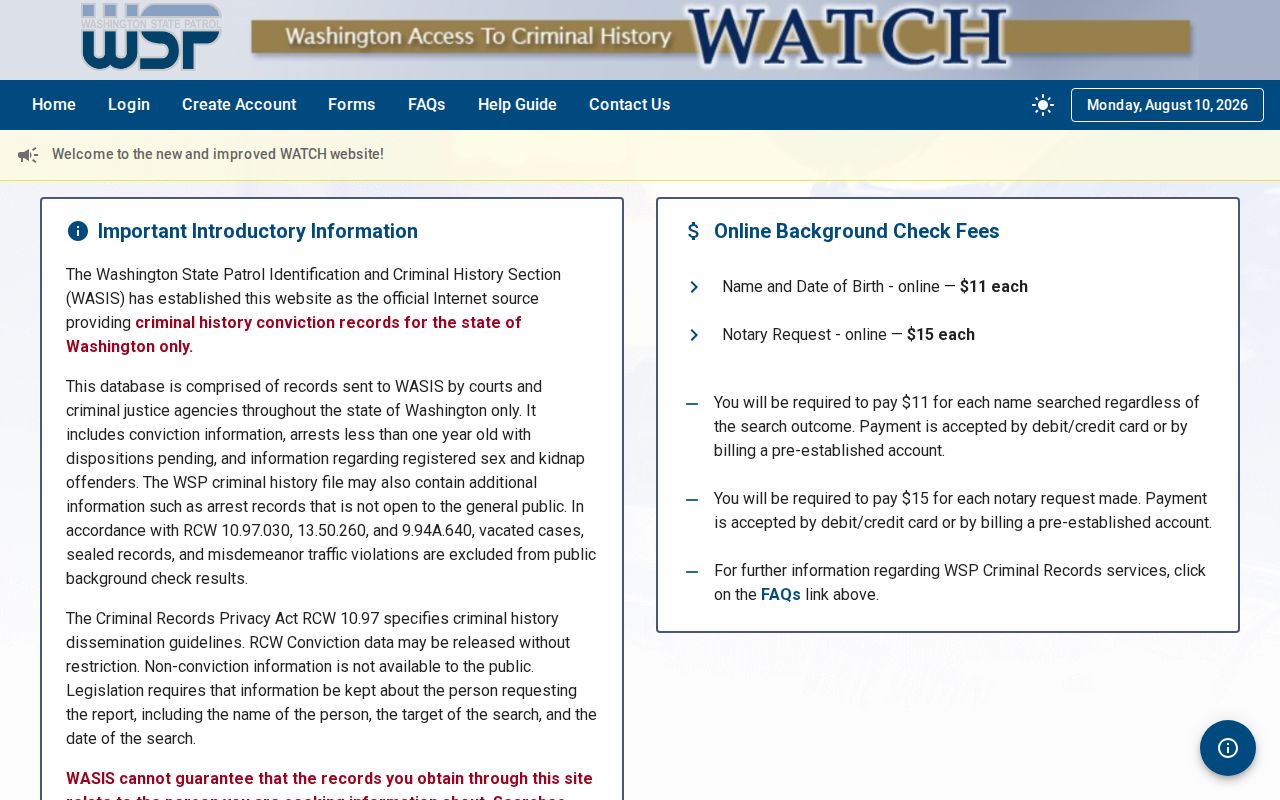
This view helps distinguish a state repository transcript from Spokane County court documents and agency reports.
Reading Spokane County WATCH Results
WATCH can return a candidate list, an exact match, a duplicate match, a pending result, or no exact match. Pending triggers manual WSP review and normally posts within 24 to 48 hours. A no-record response means the submitted identity did not match public information within WATCH's scope. It does not prove there was no sealed Spokane County case, federal matter, out-of-state record, local nonconviction file, or spelling variation.
WSP states that fingerprints are the only positive way to identify a subject. A maiden name, alias, nickname, changed spelling, or wrong birth date can change a name-search result. Each separate name query incurs the charge. The account and search-entry workflow is visible through the WATCH account page.
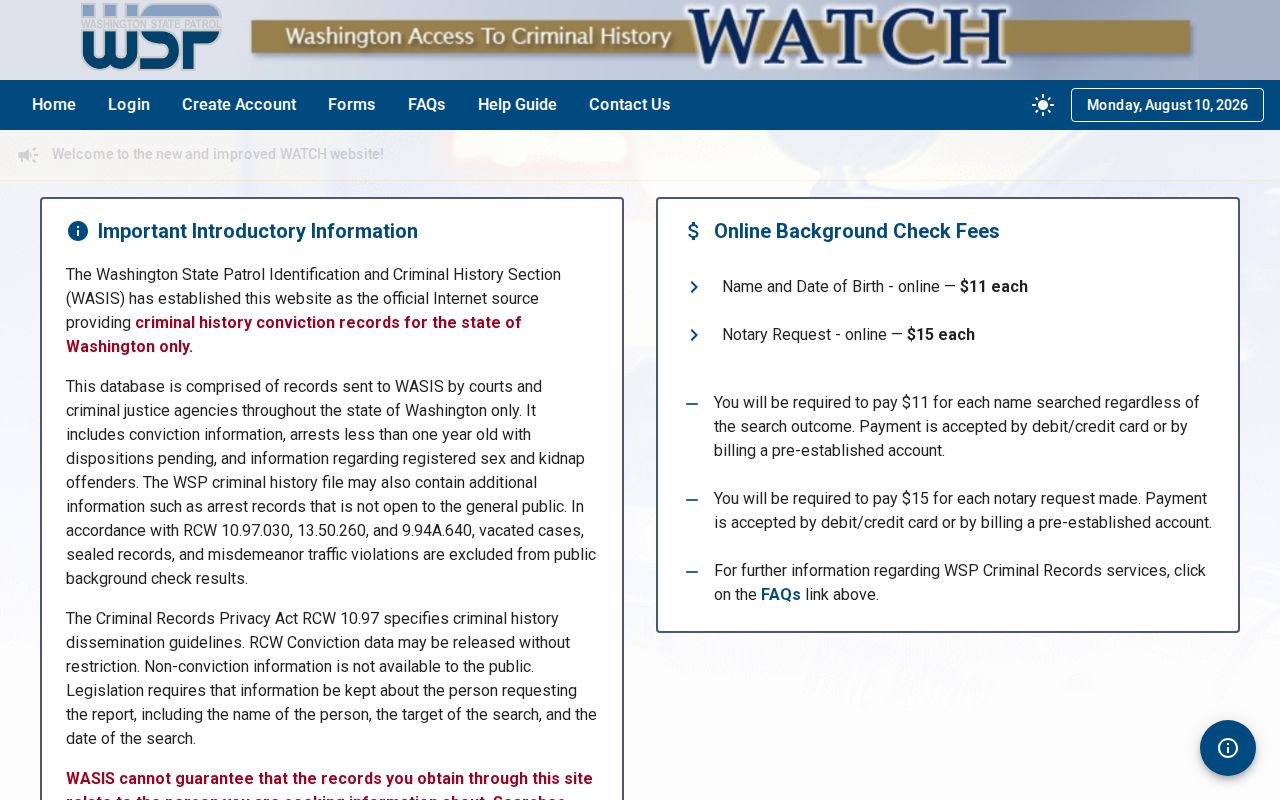
The screen reinforces why exact identity fields and a saved transaction record matter when reviewing a Spokane County match.
| WATCH field | Required | Use |
|---|---|---|
| Last name | Yes | Enter the current legal spelling. |
| First name | Yes | Use the full legal first name. |
| Middle name | No | Add it to narrow common-name matches. |
| Date of birth | Yes | An exact date materially changes matching. |
| Other names | Separate search | Aliases or former names may need another paid query. |
Criminal Record Types
Spokane County criminal records describe different stages of the justice process. An incident report contains the agency narrative, calls, witnesses, and evidence. An arrest report documents probable cause and custody. Detention Services adds a booking record with intake identifiers, fingerprints, a photograph, the charge at booking, and custody events. Much of the detailed jail file remains confidential under Washington law.
A court case file begins when a charge is filed. It can contain the docket, pleadings, hearings, pleas, rulings, warrants, judgment, sentence, and legal financial obligations. WATCH compiles reportable Washington events from agencies and courts. DOC maintains state prison and community-custody information. The public sex offender registry is a separate safety and notification system, not a general criminal record database.
- Disposition
- The recorded outcome of a filed charge, such as dismissal, acquittal, plea, or conviction.
- Booking
- The jail intake record created after a person reaches Spokane County detention.
- Docket
- The dated list of filings, hearings, orders, warrants, and other court events.
- Rap sheet
- A repository compilation of identity, arrest cycles, charges, and reported outcomes within its lawful scope.
Spokane County Court Records Bypass GovQA
The county's general Public Records Office uses GovQA for executive-agency records, but it does not supply court case documents. Spokane County makes that boundary explicit. Superior Court criminal files go to the County Clerk. District Court has its own forms and public records officer. Spokane Municipal Court and other municipal clerks control their own case documents.
For a felony judgment or filed Superior Court document, contact the County Clerk at 1116 W Broadway Avenue, Room 300, Spokane, WA 99260. The counter is open weekdays from 8:30 a.m. to 4 p.m., and the phone is 509-477-2211. Noncertified copies cost $0.25 per page. Certified documents cost $5 for the first page and $1 for each added page of that document. Mail requests should identify the case, parties, and exact documents and include the required payment and return envelope.
District Court requests use separate forms for a defendant or case, court statistics, and administrative records. The last form is not a route to a criminal case document. This division is one of the most important Spokane County routing rules.
Inside a Spokane County Criminal Record
The fields change with the source. WSP may connect names, aliases, birth date, identity descriptors, a State Identification number, fingerprints, contributing agencies, arrest cycles, charges, and reported dispositions. A Spokane County court view commonly adds the court, case type, filing date, status, attorneys, hearings, docket entries, warrant activity, judgment, sentence, and public financial-obligation entries.
Protected data may be absent or redacted. Courts can withhold sealed documents, victim information, juvenile data, protected addresses, and personal identifiers. The public jail roster is narrower than the detention file. It may show a county ID, booking number, intake time, case number, charge code, report agency, bond information, and a VINELink connection, while omitting medical, classification, and protected housing details.
| Name and identifiers | Legal and other names, birth data where public, agency IDs, and case or booking numbers. |
|---|---|
| Agency event | Incident number, arrest date, arresting agency, and alleged statutory charge. |
| Court activity | Filed charges, hearings, motions, pleas, warrants, and dated docket entries. |
| Disposition | The court-reported outcome for each filed charge. |
| Sentence | Custody, community supervision, fines, and other terms when public. |
| Custody status | County booking, state incarceration, or community-custody data within each system's scope. |
Spokane County Criminal Warrant Checks
There is no verified, complete public Spokane County active-warrant name database. Start with the local court index and look for warrant-related docket entries. Then contact the clerk for the issuing court, because a Superior Court warrant, District Court warrant, and municipal warrant do not share one public file. Confirm status before acting since an index may lag a recall or clearance.
Superior Court publishes a Wednesday bench-warrant-recall calendar at 3:30 p.m. It is a local court path, not a promise that every warrant qualifies for recall or that a person can safely appear without advice. The Sheriff can address releasable warrant information, and Crime Check is the nonemergency law-enforcement line at 509-456-2233. Washington DOC also publishes a Secretary's Warrant Search, but it covers DOC warrants, not the full Spokane County court warrant universe.
Note: A warrant shown in a Spokane County docket should be confirmed with the issuing clerk before anyone relies on its status.
Public Access Laws in Washington
Washington assigns different access rules to different record keepers. The Public Records Act governs county, sheriff, and municipal executive records. Courts follow access rules and clerk procedures instead of the county GovQA route. The Criminal Records Privacy Act controls WSP dissemination of conviction and nonconviction data. Jail files have an additional confidentiality statute.
An agency has five business days to produce a record, give an online link, acknowledge the request with a reasonable estimate, seek clarification, or deny the request with a legal basis. That deadline is for the response, not guaranteed completion. A clear Spokane County request should identify the department, record type, report number if known, dates, location, and desired format.
Key Washington laws:
Chapter 42.56 RCW governs executive-agency public records and response duties.
Chapter 10.97 RCW defines criminal-history data and limits dissemination of nonconviction information.
RCW 70.48.100 sets the jail-record confidentiality and disclosure framework.
General Rules 15 and 31 address sealing and public access to court records.
Spokane County Criminal Records Fees
Spokane County's default public-record fees differ from court copy costs and state history fees. Public inspection can be arranged after responsive agency records are assembled. Electronic production may also involve actual storage, postage, or customized technology costs after an estimate. Fees should be confirmed at the time of the request because schedules can change.
| Record service | Published amount |
|---|---|
| County paper copy | $0.15 per page |
| County scanned page | $0.10 per page |
| County electronic upload | $0.05 per four files |
| County electronic transmission | $0.10 per gigabyte |
| WATCH online name search | $11 per name, including no-record results |
| WSP fingerprint record review | $58 plus fingerprint capture |
Sealed, Expunged, and Restricted Records
Washington does not use one process called expungement for every type of Spokane County record. A qualifying conviction may be vacated. A court file may be sealed under General Rule 15. Qualifying nonconviction information may be deleted from certain criminal-history files under RCW 10.97.060. These remedies have different standards and affect different record systems.
Felony vacation under RCW 9.94A.640 and misdemeanor or gross-misdemeanor vacation under RCW 9.96.060 begin in the sentencing court. Eligibility depends on the offense, sentence completion, waiting periods, pending charges, and other statutory limits. A vacated conviction is not the same as destroying the whole court file. Sealing requires its own court analysis, while deletion from repository files does not order the clerk to erase a docket.
Obtain the judgment and proof of completion from the correct Spokane County clerk, select the proper Washington forms, file in the court of conviction, serve the prosecutor when required, and verify that the final order reaches WSP. Juvenile sealing follows a separate framework under chapter 13.50 RCW.
Spokane County Criminal Custody Layers
The Spokane County roster answers whether someone is in current or recently listed local custody. Its inspected controls are Current Inmates, Recent Bookings, Recent Releases, and surname initials from A through Z or All. It is not a typed booking-number search form. Underlying jail records generally require the signed inmate waiver or judge-signed order described by the county, plus valid identification.
After transfer, use the Washington DOC Incarcerated Individual Search for state custody or community-custody information. VINELink can provide custody-status alerts but is not a full criminal history. Federal custody is separate. The Federal Bureau of Prisons locator covers sentenced federal custody.
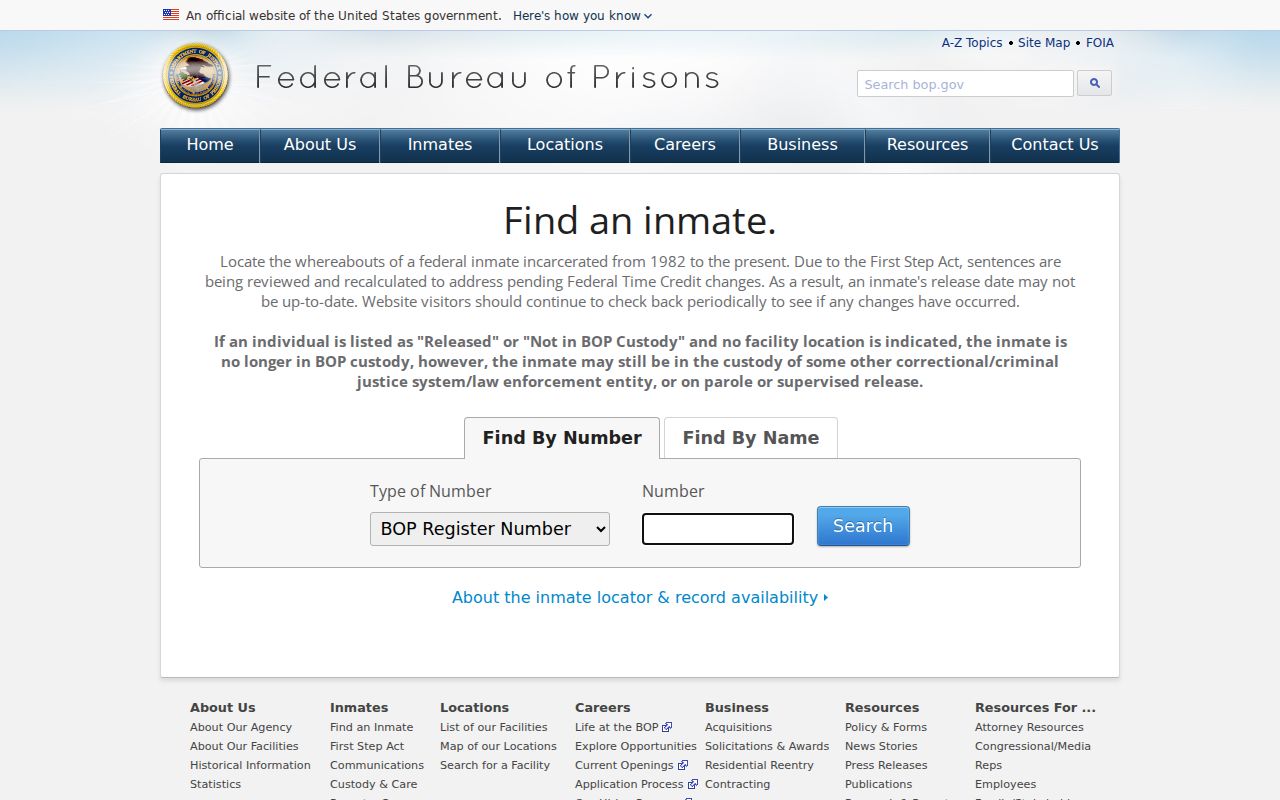
The federal locator should be used only after Spokane County jail and Washington DOC sources are ruled out or the case is known to be federal.
Federal Criminal Records in Spokane County
Federal criminal cases do not appear in WATCH or Washington Courts. Spokane County lies in the Eastern District of Washington. PACER is the authoritative online docket channel, while the Thomas S. Foley U.S. Courthouse at 920 W Riverside Avenue provides the local federal clerk setting. Public terminal inspection may avoid some PACER charges.
The Eastern District of Washington court site identifies the federal court layer based in Spokane.
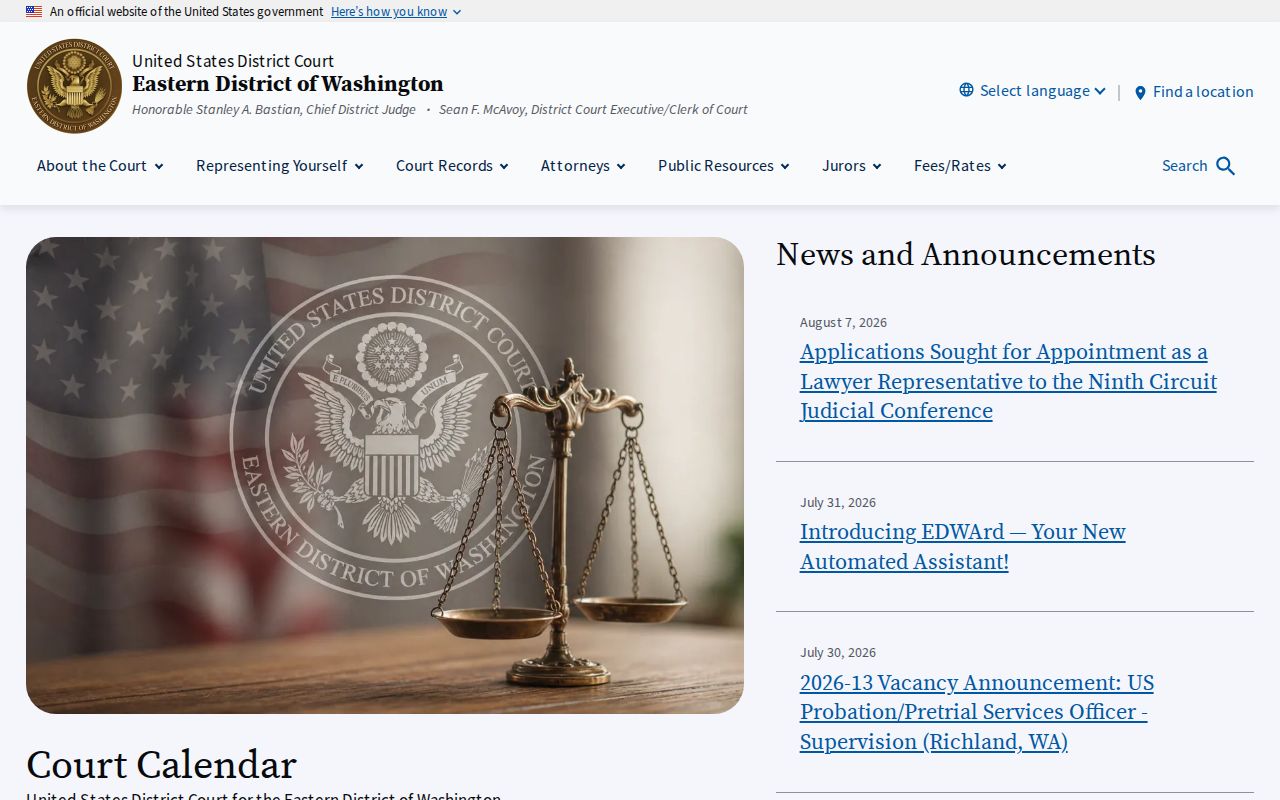
This source belongs beside, not inside, a state or Spokane County search because federal dockets and custody use their own systems.
PACER lists online access at $0.10 per page with a $3 cap for many case documents, subject to exceptions, and waives quarterly charges of $30 or less. The Foley courthouse clerk is in Room 840, phone 509-458-3400, and publishes weekday hours from 8 a.m. to 5 p.m.
Spokane County Criminal Records by City
City boundaries change the first records office. Spokane Police keeps its own incident reports, though arrestees commonly enter county detention. Spokane Valley uses Sheriff contract policing, so its report route belongs to the county system. Liberty Lake has an independent police department and city request channel. Filed felonies still reach Spokane County Superior Court, while lower-level cases must be matched to the court printed on the citation or shown in the index.
Spokane Criminal Records
Spokane Police reports stay with the city, while bookings and felony filings move into Spokane County systems.
Spokane Valley Criminal Records
Sheriff contract policing routes Spokane Valley incidents through county disclosure and detention channels.
Liberty Lake Criminal Records
Liberty Lake Police keeps city reports, while county courts and detention hold later stages.